Research reference
NAD
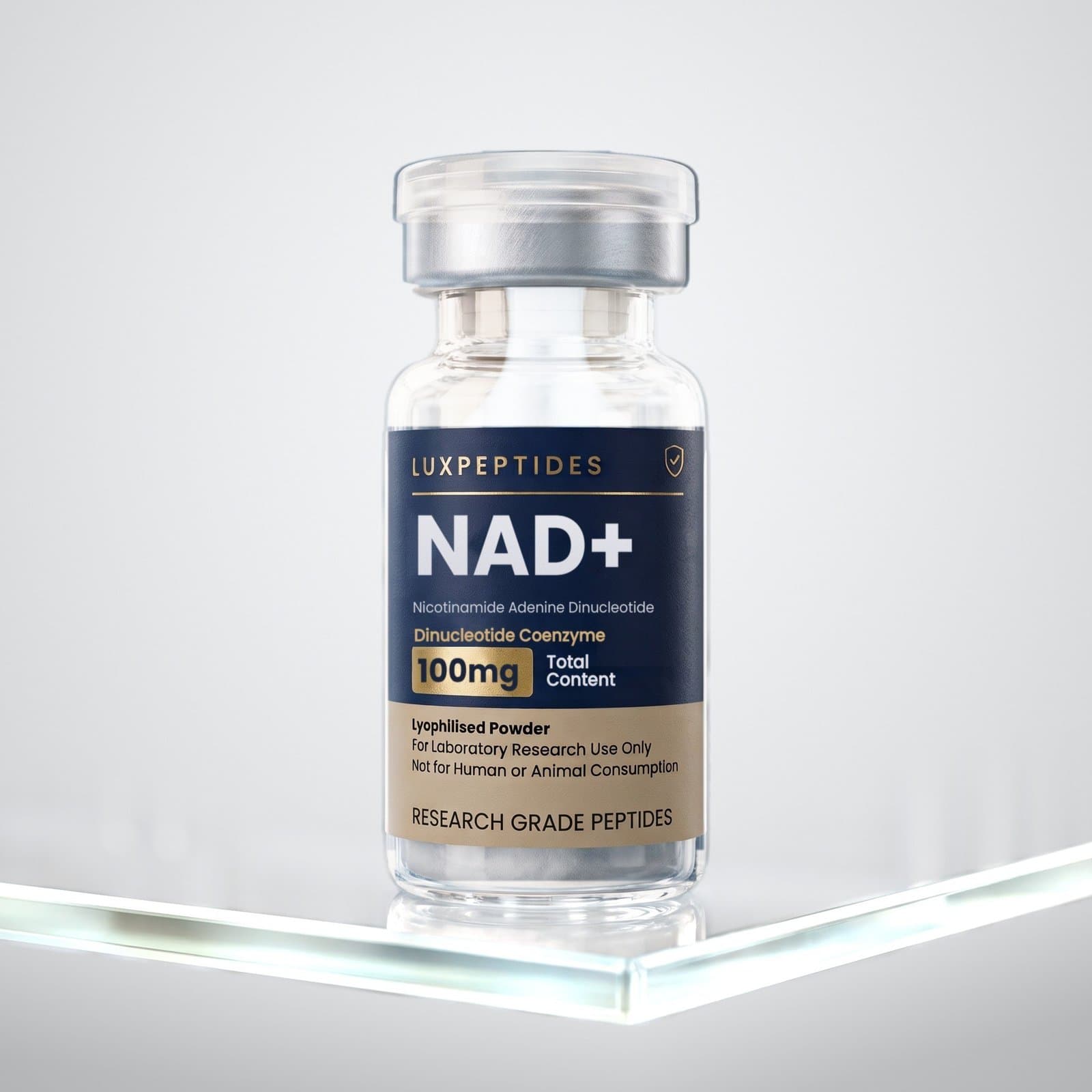
NAD+ (nicotinamide adenine dinucleotide) is a coenzyme found in every living cell. It is supplied as a lyophilised powder for laboratory research applications only.
Molecular information
Type
Dinucleotide coenzyme
Formula
C21H27N7O14P2
Weight
663.4 g/mol
CAS
53-84-9
Form
Lyophilised powder
Vial sizes
100 mg / 500 mg
Classification
Metabolic coenzyme
Research overview
NAD+ carries electrons in the redox reactions that turn nutrients into cellular energy, and it is consumed as a substrate by enzyme families including the sirtuins and PARPs. NAD+ levels fall with age in many tissues, which has made it a frequent subject of research into mitochondrial function, DNA repair and age-related metabolic change.
Common research focus areas
Laboratory research use only
This product is supplied strictly for laboratory research use. It is not a medicine, food, cosmetic, or dietary supplement, and is not for human or animal consumption. Any use outside a documented laboratory research protocol is prohibited.
Handling
For laboratory use, reconstitute with a sterile diluent appropriate to the research protocol, introducing the diluent slowly against the vial wall to minimise peptide degradation. Do not shake.
Published research
- Therapeutic Potential of NAD-Boosting Molecules: The In Vivo EvidenceRajman L et al. · Cell Metabolism · 2018 · ReviewPMID 29514064
- NAD(+) metabolism and its roles in cellular processes during ageingCovarrubias AJ et al. · Nature Reviews Molecular Cell Biology · 2021 · ReviewPMID 33353981
Evidence status
NAD+ biology is well characterised in cell and animal models. Most human studies have looked at NAD+ precursors such as nicotinamide riboside and nicotinamide mononucleotide rather than NAD+ itself, so clinical data on direct NAD+ use remain limited. It is not approved as a medicine for these purposes.